Short answer: yes—but it will tell you less than many shoppers assume. “Hemp-derived” describes a source. It does not, by itself, guarantee that a product meets the federal definition of hemp, is lawful in every state, contains no intoxicating compounds, or has been tested in a way that answers those questions.
As the federal definition shifts toward total THC, including THC that can form from THCA, the source label and the finished product’s chemistry need to be considered separately. For shoppers, retailers, and brands, that means paying closer attention to serving size, container size, lab methods, and the date of each batch’s test results.
This guide explains the main changes, including the 0.877 conversion factor, the stricter per-container cap, and the two dates businesses should plan around: November 12 and December 11, 2026. Rules and implementation can depend on the applicable law and jurisdiction, so treat dates as compliance checkpoints—not a substitute for checking current federal and state requirements.
What “hemp-derived” does—and does not—tell you
In ordinary product language, “hemp-derived” usually means a cannabinoid was obtained from hemp rather than marijuana. That can be useful information about sourcing, but it is not a complete legal or safety description.
Under the changing federal framework, a product’s status depends on more than what plant the ingredient came from. The relevant questions include what cannabinoids are in the finished product, how much is present, how the amount is calculated, and whether the product fits the applicable definition and limits. A product can use a hemp-sourced ingredient and still fall outside the federal hemp definition if the finished product exceeds a limit or contains a disallowed substance.
That is why “hemp-derived” should not be read as shorthand for “federally compliant,” “non-intoxicating,” or “legal in all 50 states.” State rules can be more restrictive, and product categories may be treated differently.
Federal hemp status: why total THC matters
A key change is a move away from looking only at delta-9 THC in isolation and toward a total-THC calculation that includes THCA. THCA is the acidic precursor to delta-9 THC. Heat can convert THCA into delta-9 THC, which is one reason a delta-9-only result may not describe the product’s full THC potential.
The commonly used calculation applies a 0.877 conversion factor to THCA:
Total THC = delta-9 THC + (THCA × 0.877)
The factor accounts for the mass lost as THCA converts into delta-9 THC. It does not mean that 87.7% of a product is THC, or that a product’s measured delta-9 number should simply be multiplied by 0.877. The calculation applies to the THCA amount.
Quick math: reading a total-THC result
Suppose a package contains 2 mg of delta-9 THC and 10 mg of THCA. Using the formula:
- THCA contribution: 10 mg × 0.877 = 8.77 mg Total THC: 2 mg + 8.77 mg = 10.77 mg
That is a per-container example if those amounts describe the entire package. If the same amounts are listed per serving and the package contains four servings, the container total would be 43.08 mg. Always check whether a COA reports results per gram, per serving, or per whole container before comparing the number with a legal limit.
The per-container THC cap is a stricter test
A per-container cap can be much more restrictive than a limit expressed per serving. A small amount in each serving may add up to a larger amount across a multi-serving package.
For example, imagine a hypothetical limit of 0.4 mg of total THC per container. A product with 0.2 mg per serving and four servings would contain 0.8 mg in the package. Even though each serving is below 0.4 mg, the container total would exceed a 0.4 mg cap. This is an illustration of the math, not a statement that every jurisdiction or product category uses that exact limit.
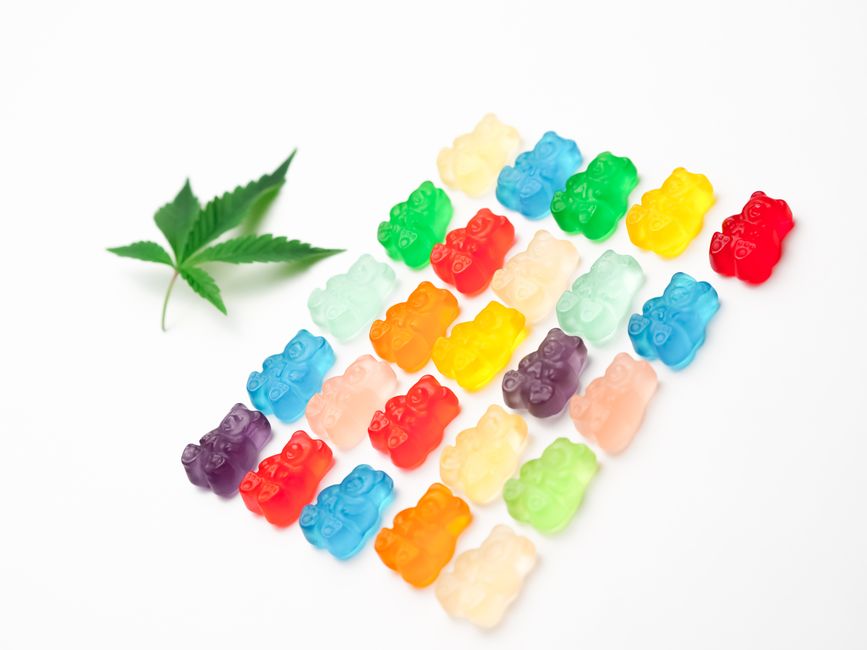

That distinction matters for tinctures, gummies, beverages, and other products sold in multi-serving packages. “Per serving” on a label does not answer a per-container question. Retailers should look for the package’s total contents and the relevant rule’s exact definition of a container, including how it treats multipacks or separate inner packages.
What the label or report says What to check Why it matters THC per serving Number of servings in the package Multiply to estimate the package total, then verify against the COA. Delta-9 THC only Whether THCA is also reported A delta-9-only figure may not reflect total THC. “Hemp-derived” Finished-product test results and applicable limits Source alone does not establish federal hemp status. “THC-free” What the lab tested for and the reporting limit The phrase needs support from an appropriate, current test—not just a marketing claim.Plant-produced cannabinoids and lab-made cannabinoids
The new framework also puts attention on whether a cannabinoid is plant-produced and how it was made. “Plant-produced cannabinoids” means compounds the cannabis plant naturally produces. That is different from a cannabinoid made through chemical synthesis or otherwise produced outside the plant.
In broad terms, lab-made cannabinoids excluded is an important concept for understanding the direction of the federal change. But the details matter: a compound’s name, starting material, manufacturing route, and the precise statutory wording may all be relevant. A product should not be assumed to qualify just because its manufacturer describes an ingredient as “hemp-derived” or says it began with a hemp extract.
Retail staff should avoid making categorical promises based on ingredient names alone. If a customer asks whether a product is federally compliant, a careful answer is: “The source label is only one part of the picture. We need to review the product’s current lab report and the rules that apply where it is sold.”
Understanding the two dates: November 12 and December 11, 2026
Businesses preparing for the change should distinguish between a legal effective date and a practical compliance milestone. The dates November 12, 2026 and December 11, 2026 are close together, but should not automatically be treated as two separate federal rules taking effect.
November 12, 2026: the key federal change date to plan around. Review products against the revised federal hemp definition, including the treatment of total THC, THCA, container totals, and cannabinoid production method. Confirm the operative statutory text and any later federal guidance before making a final legal determination. December 11, 2026: a follow-up compliance checkpoint. Use this date to finish label, inventory, supplier-document, and staff-training reviews. Do not assume it creates a blanket 30-day grace period or postpones a federal effective date unless an authoritative law, regulation, or agency notice specifically says so.This distinction matters. A retailer may choose December 11 as an internal deadline to complete a transition, but an internal deadline is not the same thing as a government-enforced safe harbor. Check state notices and official federal sources for any separate transition provisions applicable to a product or jurisdiction.
What a COA can—and cannot—prove
A certificate of analysis (COA) is a lab report for a particular sample. A useful COA can help verify cannabinoid concentrations and show whether the lab measured both delta-9 THC and THCA. It may also include identity, contaminant, and other testing, depending on the lab and product.
Third-party lab testing is valuable, but “third-party tested” is not a complete compliance answer. The report must match the actual product and batch, use methods appropriate to certificate of analysis coa the question, and report results in a way that can be compared with the applicable limit.
A practical COA review checklist
- Match the COA’s batch or lot number to the product in hand. Check the sample date and report date. An old report may not represent a newer batch. Look for both delta-9 THC and THCA when assessing total THC. Confirm whether results are reported per gram, per serving, or per container. Check the lab’s reporting limits before interpreting “not detected.” Make sure the report covers the finished product, not only a raw ingredient, when the question concerns the package being sold.
“Not detected” is not automatically the same as absolute zero; it means the analyte was not detected above the method’s reporting threshold. This is especially important when a label uses a phrase such as “THC-free.” A responsible claim should be consistent with a relevant, current COA and the test’s detection limits.
What retailers and brands should do now
For shops, the transition is a good reason to review products rather than rely on familiar packaging or supplier assurances. Brands such as Joy Organics, like any CBD brand, should be evaluated product by product and batch by batch; a brand name alone does not answer whether a particular item meets a changing rule.
- Inventory: List products by format, package size, serving count, cannabinoid profile, and batch. Testing: Ask suppliers for current COAs that include THCA and delta-9 THC, plus clear units and per-container totals where relevant. Labels: Review “THC-free,” “non-intoxicating,” “hemp-derived,” and dosage statements for accuracy and clarity. Documentation: Keep batch-linked COAs accessible to staff—QR-code binders can make lookup easier, but confirm the link opens the correct report. Training: Teach staff to distinguish per-serving amounts from per-container totals and to avoid legal guarantees. State checks: Verify local rules separately. Federal hemp status does not erase state restrictions.
So, does “hemp-derived” still mean anything?
Yes. It can still describe the source of a cannabinoid and help explain how an ingredient was obtained. But it is no longer a reliable stand-alone shortcut for federal hemp status or product legality. Under a total-THC approach, the finished product’s delta-9 THC and THCA amounts, the 0.877 calculation, container size, and whether cannabinoids are plant-produced all matter.
For consumers, the practical habit is simple: check the batch-specific COA, read the units, and distinguish the serving from the whole package. For retailers and brands, build compliance around current records and the actual rule—not a broad “hemp-derived” claim. And when someone asks whether a product is “legal everywhere,” the honest answer is that no label phrase can replace a jurisdiction-specific review.